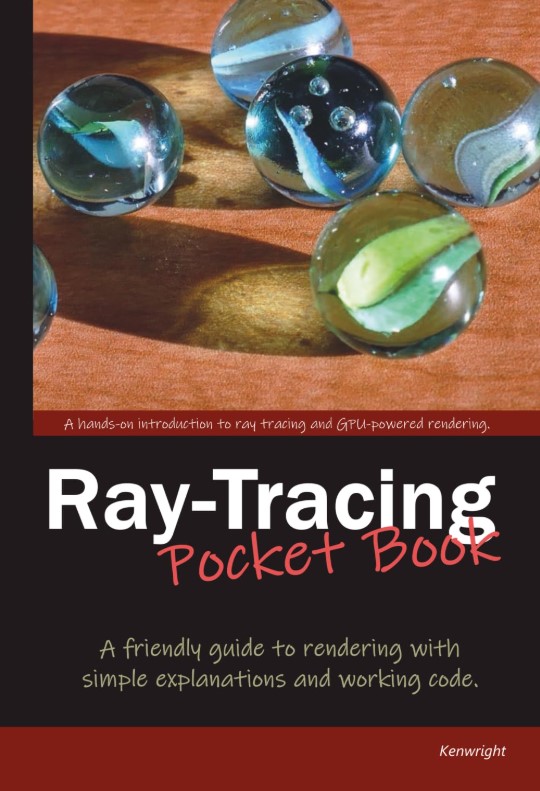
An illuminating journey into ray tracing, "Ray-Tracing Pocket Book (Paperback)" explores its profound influence on the technological evolution. With clarity and enthusiasm, this essential read delivers fresh perspectives and actionable insights that inspire curiosity and spark meaningful progress.
Readers will find themselves motivated by the book’s clear explanations, thoughtful examples, and forward-thinking perspective. The author's passion for the subject shines through every chapter, offering readers a refreshing mix of technical rigor and creative inspiration. This book stands out for its uplifting tone and empowering approach to rendering, making even the most complex topics feel approachable and exciting.
The author's mastery of rendering is evident throughout. Every chapter feels like a masterclass.
The diagrams and visuals were top-notch—clear, purposeful, and genuinely helpful in understanding the concepts.
February 14, 2026
The balance between rigorous research and relatable anecdotes makes this book feel both credible and deeply personal.
The integration of storytelling and data was masterful. It made the content both credible and compelling.
February 17, 2026
I recommended this book to my entire team—and the results were immediate. Our workflow is sharper, our thinking more strategic.
Same here. It’s rare to find a book that’s both intellectually rigorous and emotionally engaging—this one nails it.
February 21, 2026Stay updated with the latest in tech literature
Our selections include a remembrance of the lost Tuskegee Airmen, an exploration of Coretta Scott King's activism, a history of Black History Month an...
Read MoreSome stories are like those friends who say, “We should totally hang out,” and then vanish like they got drafted by NASA. You try calling them bac...
Read MoreTwo time-stamped poems are taken from a book-length sequence tracking the human moments of a factory night shift01.29When we look up at stars on break...
Read MoreEnhance your reading and learning experience
Use a pointer or your finger to guide your eyes. This can increase reading speed by 25%.
Take brief notes after each chapter. Summarizing helps cement knowledge.
Organize books by color for visual appeal or by genre for practical access.
Write documentation as if the next person reading it is a violent psychopath who knows where you live.
Rubber Duck Debugging: explain your code line by line to an inanimate object.
Follow the 20-20-20 rule: every 20 minutes, look at something 20 feet away for 20 seconds.
Sarah Johnson
Professional ReviewerThis book didn’t just inform—it inspired me to rethink how I approach 3D in my own work.
February 16, 2026